Tomorrow is World Aids Day and I'll be wearing a Red Ribbon, will you?
Started on 1st December 1988, World AIDS Day is about raising money, increasing awareness, fighting prejudice and improving education. The World AIDS Day theme for 2010 is 'Universal Access and Human Rights'. World AIDS Day is important for reminding people that HIV has not gone away, and that there are many things still to be done.
According to UNAIDS estimates, there are now 33.3 million people living with HIV, including 2.5 million children. During 2009 some 2.6 million people became newly infected with the virus and an estimated 1.8 million people died from AIDS.
The vast majority of people with HIV and AIDS live in lower- and middle-income countries. But HIV today is a threat to men, women and children on all continents around the world.
Find out more by visiting the World AIDS Day campaign page.
This is a very funny video of Hugh Laurie (Dr House, An American doctor played by a British actor) at Ellen's Show (an American Comedian and TV Host) where they test each other on slang terms from their own countries. I hope you find it as amusing as I did. Enjoy!
The British Library has really interesting websites, very useful to those who, like me, love the English language. You can try the learning website first and go on from there. I've chosen one about accents and dialects as we talked about this last Friday in the Bilingual group:
Travel through the country in this website by the British Library Online, and discover the UK’s rich landscape of diverse accents and dialects.
The UK is a rich landscape of regional accents and dialects, each evidence of society’ s continuity and change, local history and day-to-day lives. This site captures and celebrates the diversity of spoken English in the second half of the twentieth century.
Officially recognised by the United Nations since 1999, when it declared 25th November as International Day for the Elimination of Violence Against Women, White Ribbon Day first originated in 1960. It was on this day, 49 years ago, that three sisters in the Dominican Republic, all political activists and campaigners for equal rights, were murdered by people working for the fascist government they opposed. Since then the sisters – Patria, Maria and Minerva Mirabel – have become symbols of dignity and inspiration around the world:
July 1981
Women from across Latin America came together in Columbia. Appalled by the extent and diversity of violence against women, they agreed to hold an annual day of protest, and they decided to adopt 25th November as the date for this International Day Against Violence Against Women in memory of the Mirabel sisters.
1991
The first White Ribbon Campaign was launched by a group of men in Canada after the brutal mass shooting of 14 female students at the University of Montreal.
1996
In South Africa the National Network on Violence Against Women launched their own White Ribbon Campaign and many South African womens groups quickly adopted the White Ribbon symbol.
1998
WOMANKIND launched the first White Ribbon Day in the UK.
1999
The UN officially recognised 25th November as International Day for the Elimination of Violence Against Women.
The White Ribbon is a symbol of hope for a world where women and girls can live free from the fear of violence. Wearing the ribbon is about challenging the acceptability of violence by getting men involved, helping women to break the silence, and encouraging everyone to come together to build a better world for all.
Black Friday is the Friday after Thanksgiving, when Christmas shopping season begins. Black Friday, as a term, originated in Philadelphia in the 60s to refer to the traffic associated with the biggest shopping day of the year.
This is how Black Friday works. Retailers distribute ads in Thanksgiving newspapers of crazy deals. You have to arrive sometimes between 3:00 AM and 6:00 AM to take advantage of the specials. They’re often called “doorbusters”. These sales are so cheap, the companies are either losing money or making practically nothing on every sale.
These sales are known as “loss leaders”. They are designed to get your attention and get you into the store. Odds are you’ll have your eyes set on one item and when you get to the store it’s sold out. These items are often in very limited quantities. But you’re already at the store with a shopping list so you’re going to buy everything else you had to buy that day.
One way or another, they will get money out of you.
Thanksgiving is one of the most popular holidays in the United States today. It is celebrated on the last thursday of November (25 Nov this year). No matter what Americans are giving thanks for , it’s a great opportunity to spend time with family and friends, share stories and relax.
More about thanksgiving at history.com
The Big Rule: Tell them what you're going to tell them. Tell them. Tell them what you told them.
In other words, your presentation should have three parts: an introduction, body, and conclusion. Let's look at these three parts and see what you should include in each.
The Introduction
The purpose of the introduction is not only to introduce your topic, but also to interest your audience in the topic.
Grab the audience's attention by somehow involving them in your topic. You can do this by asking a question, offering an interesting fact, using a quotation or telling a short story. (The question "How many people here have a home computer?" is a lot more interesting than "Today I'm going to tell you about the Internet.")
You should preview the content of your presentation by offering a brief outline of what you will be discussing. You may also want to include why you choose this topic to present on.
The Body
The body of your presentation should support your introduction by offering facts, opinions, and reasons to support your topic. It should contain at least three ideas with supporting details to illustrate your point.
The Conclusion
The conclusion should restate the main points without giving examples. Think of it as a brief summary which emphasizes what you want the audience to remember. You can finish with a recommendation, a personal thought, an observation, or a question. Your closing statement (the last statement) should pull your presentation together.
Some tips:
Write notes based on keywords.
Rehearse your presentation several times and modify it as necessary.
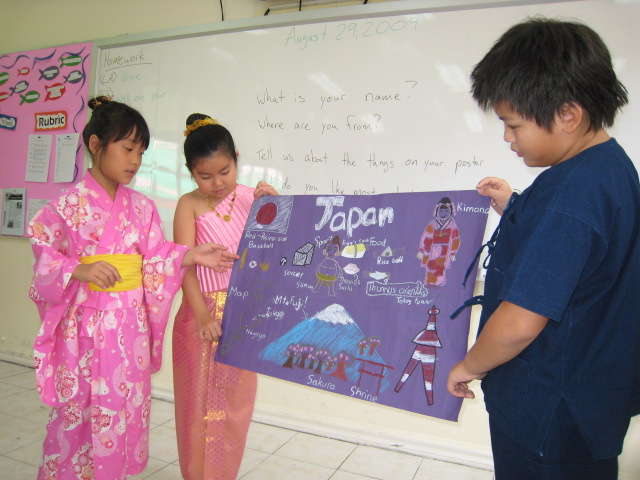
Make use of visual aids.
Use clear, simple language.
Use active verbs and concrete facts.
Explain the structure of your presentation at the beginning so that your listeners know what to expect.